


The Pressure Behind the Passion
Being a student athlete is often seen as exciting and rewarding, however, behind the wins and school spirit is a constant balancing act between academics, sports, and a personal life. Over time, this pressure can turn into something serious: burnout.
According to the American Psychological Association (APA), burnout is defined as “a state of physical and emotional exhaustion caused by prolonged stress.” Student-athletes face this stress on a daily basis due to intense practices, games, and the expectation to succeed on the field and in the classroom.
What started as a passion can quickly become overwhelming.
When Schedules Become Too Much
A typical day for a student athlete does not end when school does because practices, games, and travel usually take up hours, which leaves little time for rest or homework. This packed schedule takes a toll on both the mental and physical health of high school students.
The NCAA’s student athlete well-being study found that many athletes feel overwhelmed when they try to balance school and sports. Time demands interfere with sleep, academic performance, and overall well-being. As a result, students feel as if they are constantly falling behind.
The Signs of Burnout
Burnout does not happen overnight; it builds up slowly and goes unnoticed until it’s a serious problem. Many student athletes don’t realize what they’re experiencing.
The Mayo Clinic has common signs of burnout as exhaustion, reduced performance, and feelings of detachment. Athletes may lose their motivation for a sport that they once loved or struggle to keep up in school. In some cases, burnout can eventually lead to anxiety or depression.

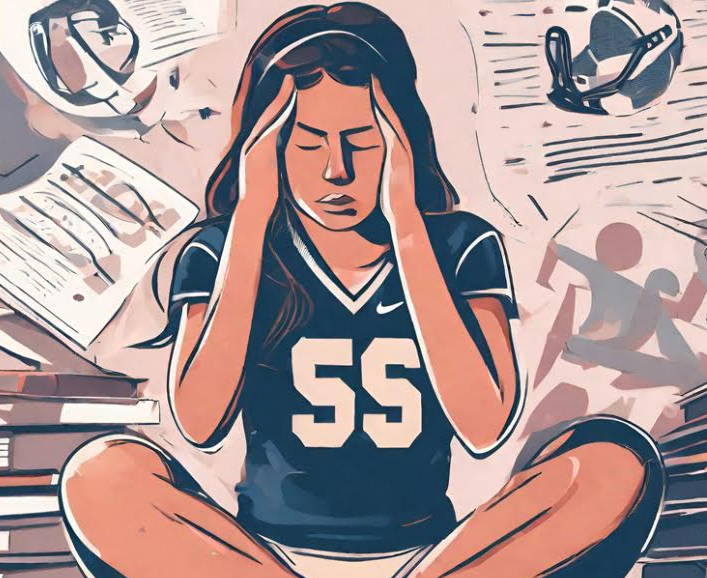
Image Credit: The Voyager
More Than Just Sports
Burnout doesn’t just affect performance, it impacts everyday life. Student athletes often sacrifice their social time, miss out on events and experiences that their peers enjoy. Over time, this leads to feelings of isolation.
Some students choose to even quit sports altogether and what once was a source of joy becomes a source of stress for them. This decision can be super difficult, especially for those who have spent years dedicated to their sport.
Finding a Better Balance
Burnout is pretty common, but it is also preventable. Small changes can make huge differences in helping student athletes manage their time and stress. Support from schools, coaches, and family is very important.
Experts exemplify the importance of prioritizing rest, improving time management, and creating a strong support system. Coaches can help too by encouraging realistic expectations and allowing time to recover. Students should be able to feel comfortable enough to speak up when they’re feeling overwhelmed.
A Conversation That Matters
Student athlete burnout is becoming more common, but it’s often overlooked. Raising awareness is the first step towards change because when people start to understand the pressure that athletes face, real solutions can follow.
For many high school athletes, success should not come at the cost of their own well-being. After all, the goal isn’t to just win games, it’s to stay healthy, physically and mentally.
Featured Image Credit: El Camino College